

What is cavity wall insulation?
Cavity wall insulation is a means of preventing heat escaping from a property. Heat naturally travels to where there is cold air so will pass through the brick work of a house to the cooler air outside. By putting a layer of insulation into the cavity of the wall this stops the heat escaping from the property, thus making the house more efficient and cheaper to heat. Whilst traditional types of cavity wall insulation such as wool and bead offer sufficient insulation in terms of keeping a property warm they offer nothing in terms of flood resistant qualities. These types of insulation tend to soak up the water and take a long time to dry out, causing damage to the property and also often resulting in the insulation offering inadequate insulation qualities and having to be replaced.
This highlights the need for sufficient flood resistant insulation, particularly given the recent floods across the United Kingdom this Christmas.
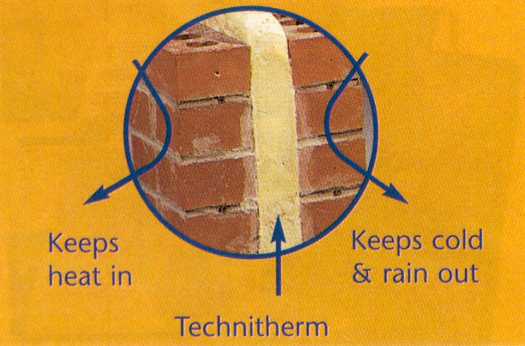
OUr flood resistant cavity wall insulation
Technitherm® is our polyurethane spray foam insulation. Unlike traditional Insulation Technitherm® is low absorbent so does not soak up water during a flood, therefore water won’t pass through it damaging the inside of a property. Technitherm® is a closed cell rigid insulation which is injected externally into the property as a liquid and quickly expands and hardens completely filling the cavity. This closed cell structure is what makes Technitherm® flood resistant, because this is what stops the water being absorbed by the foam and stops water passing.
Technitherm® also offers great insulation qualities also, meaning a warmer property and cheaper bills. It also offers structural support where needed as well as preventing damp for properties without any damp course.
want more information?
Our technical team are on hand to discuss your property or project and how our cavity wall insulation product, Technitherm® can help you achieve the results you want using our approved installer network.
If you’ve been effected by flooding or want to know what to if you do get flooded, check the National Flood Forum for more information.
